On August 7 and 8, the AMFS will host its premiere Critical Conversations symposium, bringing together distinguished minds to chart out the classical music journalism of today and tomorrow.
This symposium will feature some of the most distinguished music journalists of today from prominent publications, including the New York Times, the Wall Street Journal, the San Francisco Chronicle, the Denver Post, and the Philadelphia Inquirer. These panelists will discuss their craft and the classical music field at two public panels. The Saturday August 7 panel, "The Next Big Idea," explores how the splintering of our culture is affecting the classical music of today, and whether or not historians will look back and perceive a "21st-century sound." The Sunday August 8 panel, "Toward a New Music Journalism," will confront the music critic‚s role in an environment where journalism is accelerated, and readers are frequently uninitiated to the music.
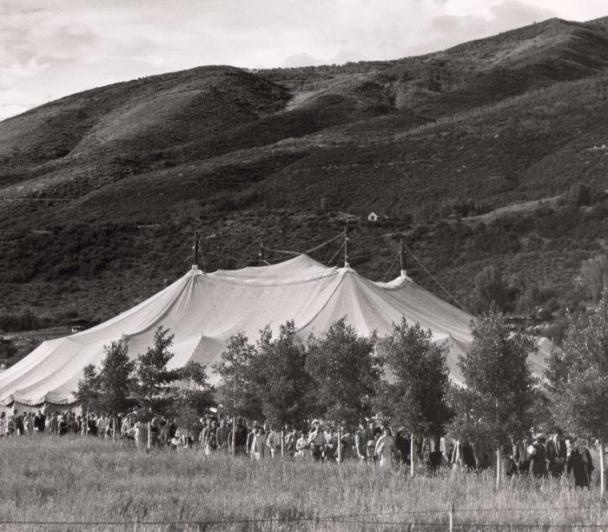
Since the Goethe Bicentennial Celebration that led to the formation of the Aspen Music Festival 55 years ago, Aspen has been known not only for its world-class music, but as a melting pot of ideas for intellectual and cultural avatars.
With this symposium for music journalists—which will become an annual event for classical music journalists in Aspen—the AMFS celebrates the importance of robust and incisive journalism to classical music’s enduring vitality.
1) The Next Big Idea [3:30 pm Saturday, Hospitality Tent]
If the history of music is the recorded conversation of ideas, then where do we find ourselves in that conversation at the start of the 21st century? In the past, musical ideas have been fought over, affirmed, then challenged again, with each generation adding something new. Ultimately consensus was achieved around an idea, and that idea gained traction with a critical mass of composers.
Now we are in a period when no particular musical idea seems to represent our age, and it appears that for the moment—at least on the surface—there is no obvious direction in which music is going. What is the next chapter in the historical conversation of musical ideas, and where are the seeds of those ideas planted? Or: Is it possible that, with traditional cultural structures fragmenting, and the ways people are getting and using culture fundamentally changing, it is no longer possible for a unifying style to emerge? Is it still possible for a Big Idea to attain the kind of traction needed to energize and acquire a critical mass of composers and performers?
2) Toward a New Music Journalism? [2 pm Sunday, Harris Concert Hall]
Technological, corporate, and cultural changes have impelled media entities to focus on “faster, more relevant, more efficient” journalism. But classical music journalism does not fit well into these constructs. Classical music writers have struggled to make a compelling case for relevance to a mass audience that prefers movies, videogames, and other quick-gratification media. Their writing frequently employs jargon and requires background that uninitiated readers lack. And few writers are able to communicate what they need to in a “tighter, brighter way” without losing the essence of what they are trying to say.
So in this McJournalistic era: How should music journalists move forward?
Is the traditional “event-driven” model for covering classical music—the review, the preview, the profile—worth fighting for, and does it adequately express what the public needs to know about music today? Or is it the best and most pragmatic approach to a media environment that’s unlikely to afford more room for “think-pieces”? How can journalism on the Internet and other new media work (including Concert Companions and other on-site enrichment devices) to classical music’s advantage? We look at traditional music journalism, and also at music writers and content providers who pursue new approaches, with the aim of eliciting ideas from critics and musicians alike on what journalism best serves music today.