
-
03
-
03
-
03
-
03
-
03
-
03
-
03
-
03
-
03
-
03
-
03
-
03
-
03
-
03
-
03
-
03
-
03
-
-
-
03
-
03
-
03
-
03
-
03
-
03
-
03
-
03
-
-
03
-
03
-
03
-
03
-
-
03
-
03
-
03
-
03
-
-
03

The Aesthetic of the Fragment in J. S. Bach’s Art of Fugue
Johann Sebastian Bach’s Art of Fugue is one of the most famous unfinished works in music history, and is perhaps the only canonical work to be frequently performed in a way that draws attention to its incompleteness. Only the finished movements of Schubert’s Unfinished Symphony are heard on a regular basis; even Manfred Honeck’s noninterventionist interpretation of Mozart’s Requiem fills in the gaps left behind upon the composer’s death, drawing attention to the break and the repair like kintsugi pottery. But it is not at all uncommon for performers to present Bach’s Fugue on Three Subjects—the only unfinished fugue published in the collection—as organist Paul Jacobs does this weekend, with its edges ragged and its harmonies unresolved; to present it, in Jacobs’s words, “as Bach left it.”
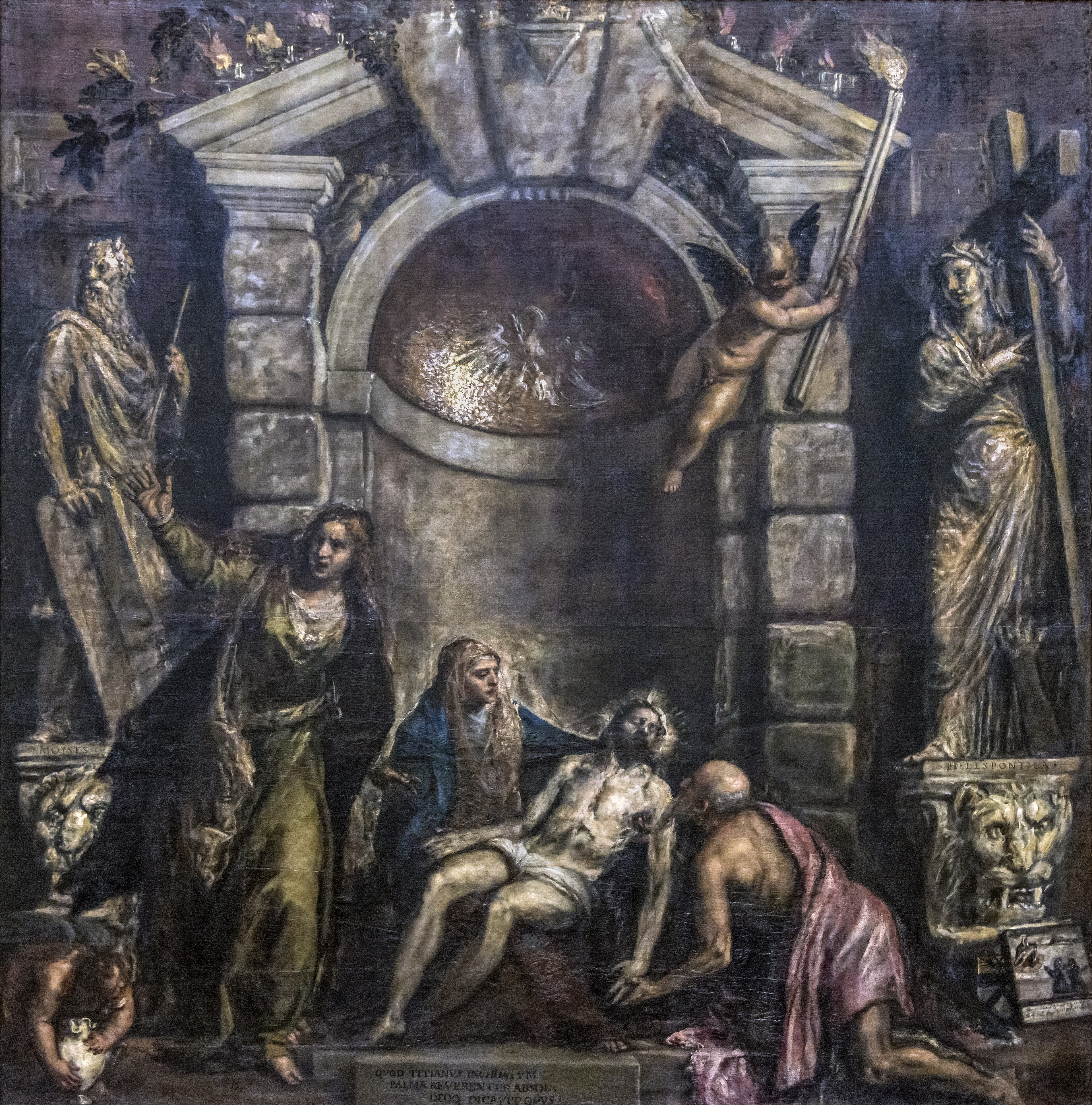
The mystique of an artist’s last works has a long history in Western culture. Pliny the Elder, writing in his Natural History of AD 77, observed the “very unusual and memorable fact that the last works of artists and their unwrought pictures . . . are more admired than those which they finished, because in them are seen the preliminary drawings left visible and the artists’ actual thoughts, and in the midst of approval’s beguilement we feel regret that the artist’s hand while engaged in the work was removed by death.” Like many other aspects of ancient thought and culture, Pliny’s words gained a new currency during the Renaissance, when unfinished works—and those that were made to appear unpolished or incomplete—began to emerge as a distinct and effective aesthetic category. Titian’s late paintings, including the unfinished one presented above, use painstaking technique to create an impression of unpolished brushwork; several of Donatello’s sculptures, including this bronze lamentation scene, inspired later artists with their expressive usage of the rough textures artists would typically smooth out before declaring a work complete. This approach became known as non finito style—a deliberate evocation of the emotional power held by unfinished works.
No similar movement has developed in classical music. While unfinished or fragmentary works sometimes occupy an outsized position in our imaginations—think of the prominence of Mozart’s Requiem in the play (and film, and miniseries) Amadeus, or the extreme scholarly reverence for Beethoven’s sketches—it remains rare even in contemporary music for works to be presented non finito. The aesthetic of perfection, a word whose etymology carries the connotation of completeness, is persistent in the art form even today.
All this makes The Art of Fugue even stranger. In his biography of Bach, Martin Geck posits that the publishers of its 1752 first edition, an anonymous group that likely included some of Bach’s sons and perhaps also his wife, Anna Magdalena, were invoking the non finito aesthetic: presenting the Fugue in Three Subjects “as Bach left it,” in a manner that evokes the fragmentary monuments of the ancient world as received by the modern, advances the myth of the great man Bach. But even so, the decision was so exceptional that Friedrich Wilhelm Marpurg, who introduced the work, felt obliged to justify and apologize for it:
In the middle of working out his last fugue, in which he uses the entry of the third subject to announce himself by name, he was surprised by [his illness of the eyes, and by his death, which shortly followed.] We nevertheless have cause to flatter ourselves that the appended sacred chorale in four parts, which the blessed man in his blindness dictated spontaneously to one of his friends, compensates for this deficiency; in this way his friends will protect his muse from harm.
Er wurde von demselben [i.e. seiner Augen-Krankheit, und den kurz darauf erfolgten Tod] mitten unter der Ausarbeitung seiner letzten Fuge, wo er sich bey Anbringing des dritten Satzes nahmentlich zu erkennen giebet, überraschet. Man hat indessen Ursache, sich zu schmeicheln, dass der zugefügte vierstimmig ausgearbeitete Kirchenchoral, den der seelige Mann in seiner Blindheit einem seiner Freunde aus dem Stegereif in die Feder dictiret hat, diesen Mangel ersetzen, und die Freunde seiner Muse schadlos halten wird.
With such an introduction, it is hard to imagine that the publishers expected the fragmentary fugue to be performed as written, and certainly not in public; it is more likely that it was published as an object of study, which would be in keeping with the pedagogical aims of the Art of Fugue. Even today, many performers choose not to play the incomplete fugue in performance, opting instead for one of a multitude of completions; Daniil Trifonov, for example, plays the cycle in a version that ends with his own interpretation of the fugue’s conclusion.
Paul Jacobs’s choice to play the work in its fragmentary version is therefore a dramatic intervention, regardless of the fact that it was published in this form. The musicologist Richard Taruskin, in his writings on the historically informed performance movement, famously observed that these performers’ putative fidelity to the original text often functions as an excuse to create distinctively contemporary sounds and effects. This example is that case in point: the alienating effect of the music’s sudden stop acts as a meta-commentary on the conventions of classical music, the pathos of Bach’s last illness, and the concept of completeness itself. — © Erin Pratt

-
03
-
03
-
03
-
03
-
03
-
03
-
03
-
03
-
03
-
03
-
03
-
03
-
03
-
03
-
03
-
03
-
03
-
-
-
03
-
03
-
03
-
03
-
03
-
03
-
03
-
03
-
-
03
-
03
-
03
-
03
-
-
03
-
03
-
03
-
03
-
-
03